











SEBON Sale-Notice Rule for Promoter Shareholders: What Retail Investors Should Watch

Share Hub
October 23, 2026 03:47 AM
One of the oldest worries in NEPSE is supply you cannot see coming. A stock rallies for weeks, retail investors pile in, and then a large block of promoter shares hits the market just as the lock-in period ends. By the time most people notice, the price has already fallen.
SEBON has been tightening the rules on exactly this. In October 2026 it revised the notice requirement for founding shareholders who want to sell. This guide explains what the rule says, how it changed, and how retail investors can use it together with lock-in data to avoid being caught on the wrong side of a large sale.
Who the rule applies to
The rule covers fundamental (promoter) shareholders who were present at the time of the IPO and who want to sell after their lock-in period ends. These are typically the founders and early investors who hold a large share of the company and could move the price significantly by selling.
What changed
| Earlier directive | Revised rule (Asoj 23, 2083) | |
|---|---|---|
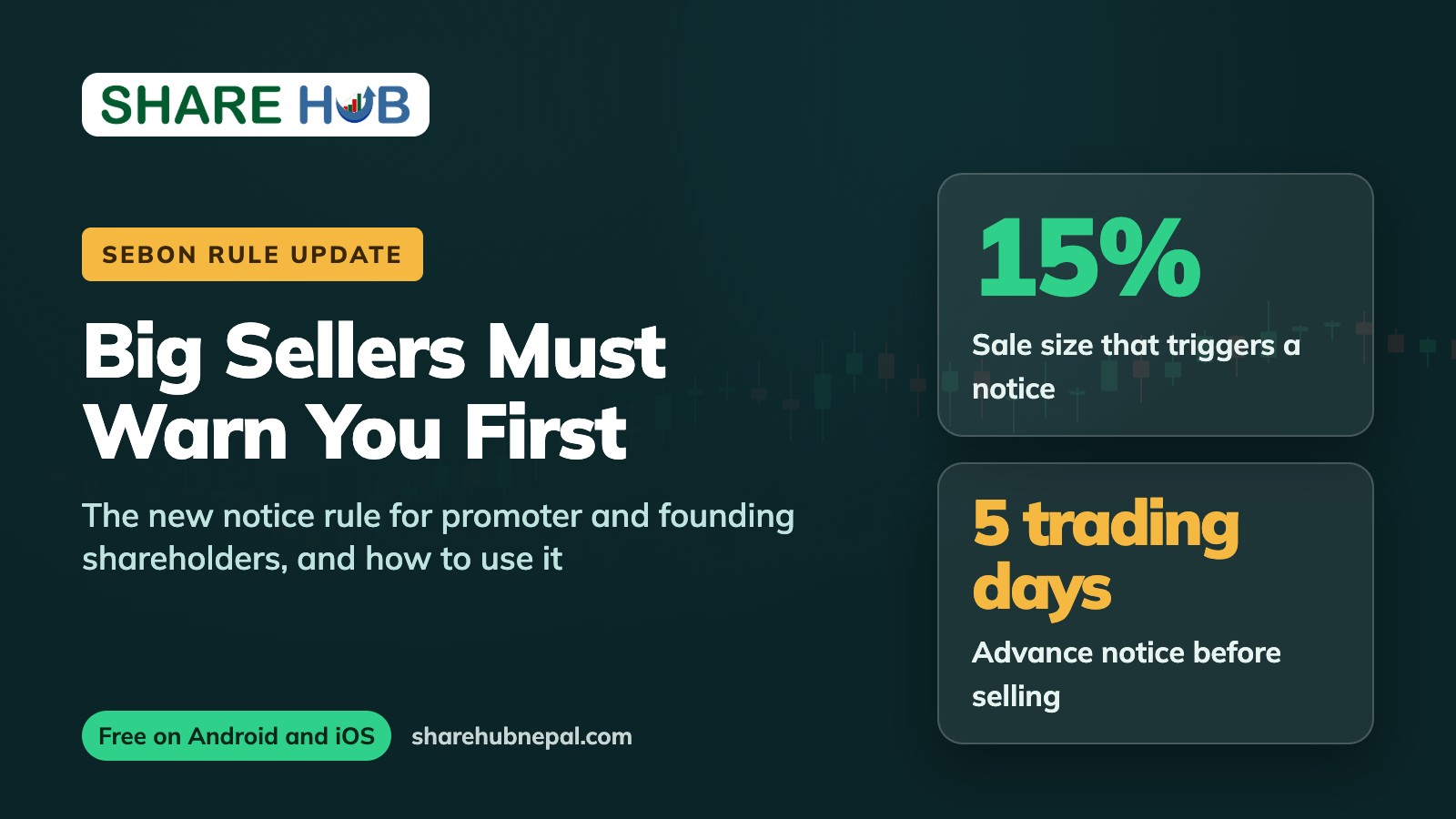
| Sale size that requires notice | 5% or more of the holding | 15% or more of their shares |
| Advance notice | 15 days | 5 trading days before the sale |
| Validity of notice | Not specified | Three months |
| Company duty | Not specified | Pass the notice to NEPSE as soon as possible |
The revision also requires shareholders who keep part of their holding and later buy more of the same company's shares to report the price and quantity to the company, which must then release it to NEPSE.
Reporting on the revision has been brief, and some details, such as whether sales below 15% need any notice, are not fully clear. Treat the table as a summary and check SEBON's directive for the exact wording.
Why it matters to retail investors
- Visibility: a notice tells the market that a large seller may be coming, so the information is no longer limited to insiders.
- Time to react: five trading days is enough to review your position, tighten a stop or avoid buying into incoming supply.
- Price behaviour: stocks with large holdings about to unlock often trade under pressure before and after the unlock date. Knowing the calendar helps explain moves that otherwise look random.
How to use lock-in data alongside the rule
Promoter shares are locked for a set period after the IPO, commonly three years. ShareHub's Promoter Unlock page lists upcoming lock-in end dates with total shares, locked shares and days remaining, and a separate tab covers mutual fund unlocks.
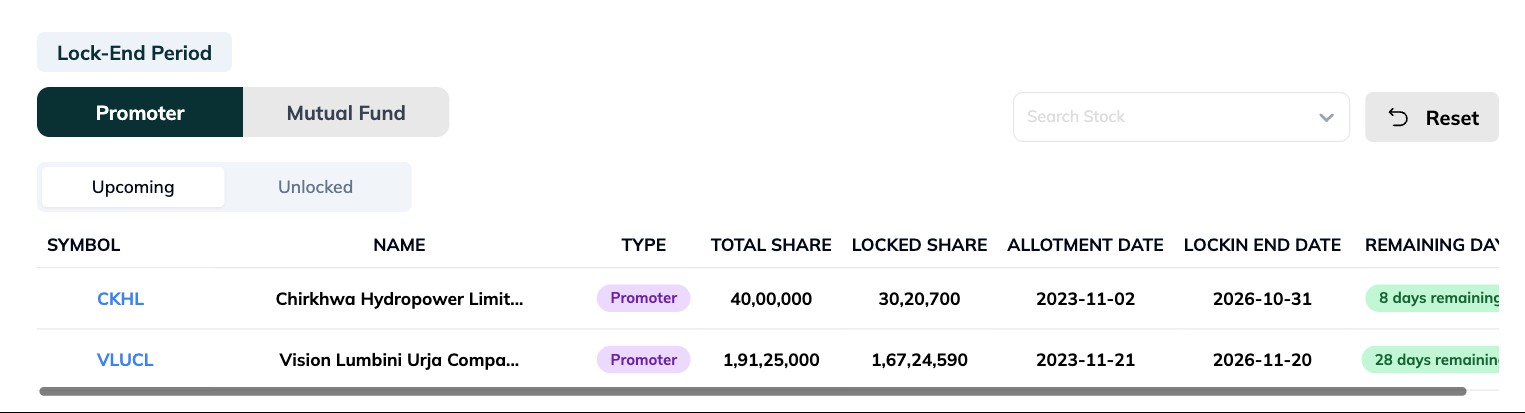
A practical routine:
- Every week, check which stocks you hold or follow have lock-ins ending in the next 30 to 60 days.
- Compare locked shares with the stock's normal daily volume. A large locked block relative to volume means a bigger potential overhang.
- Watch NEPSE announcements for sale notices from those companies' fundamental shareholders.
- Look at broker activity. Large, steady selling from a few brokers around an unlock date often signals distribution. Our guide to reading the floorsheet and broker analysis explains how to spot it.
Who really moves prices in NEPSE? This ShareHub video looks at the large players behind big moves:
What the rule does not do
A notice is not a sale. Shareholders may give notice and then sell only part of their stake, or nothing at all within the three months. And an unlock does not automatically mean a crash. Strong companies sometimes absorb promoter selling with little effect. Use the information as one input alongside fundamentals and price action, not as a trading signal on its own.
Also in the app: Promoter Unlock, Mutual Fund Unlock and broker analysis is available in the ShareHub mobile app for Android and iOS, so you can do it from your phone as easily as from your computer.
Frequently asked questions
What is the new SEBON rule for promoter share sales?
Fundamental shareholders who were present at the IPO must notify their company five trading days before selling 15% or more of their shares after the lock-in ends. The notice is valid for three months and is passed to NEPSE.
What was the earlier rule?
An earlier directive required 15 days' notice before selling 5% or more of a holding.
Where can I see promoter unlock dates?
On ShareHub's Promoter Unlock page, which lists upcoming lock-in end dates and locked share quantities.
See supply before it hits the market
Track promoter and mutual fund unlocks and broker activity with ShareHub Premium.
View promoter unlocksGet it on Google PlayDownload on the App Store